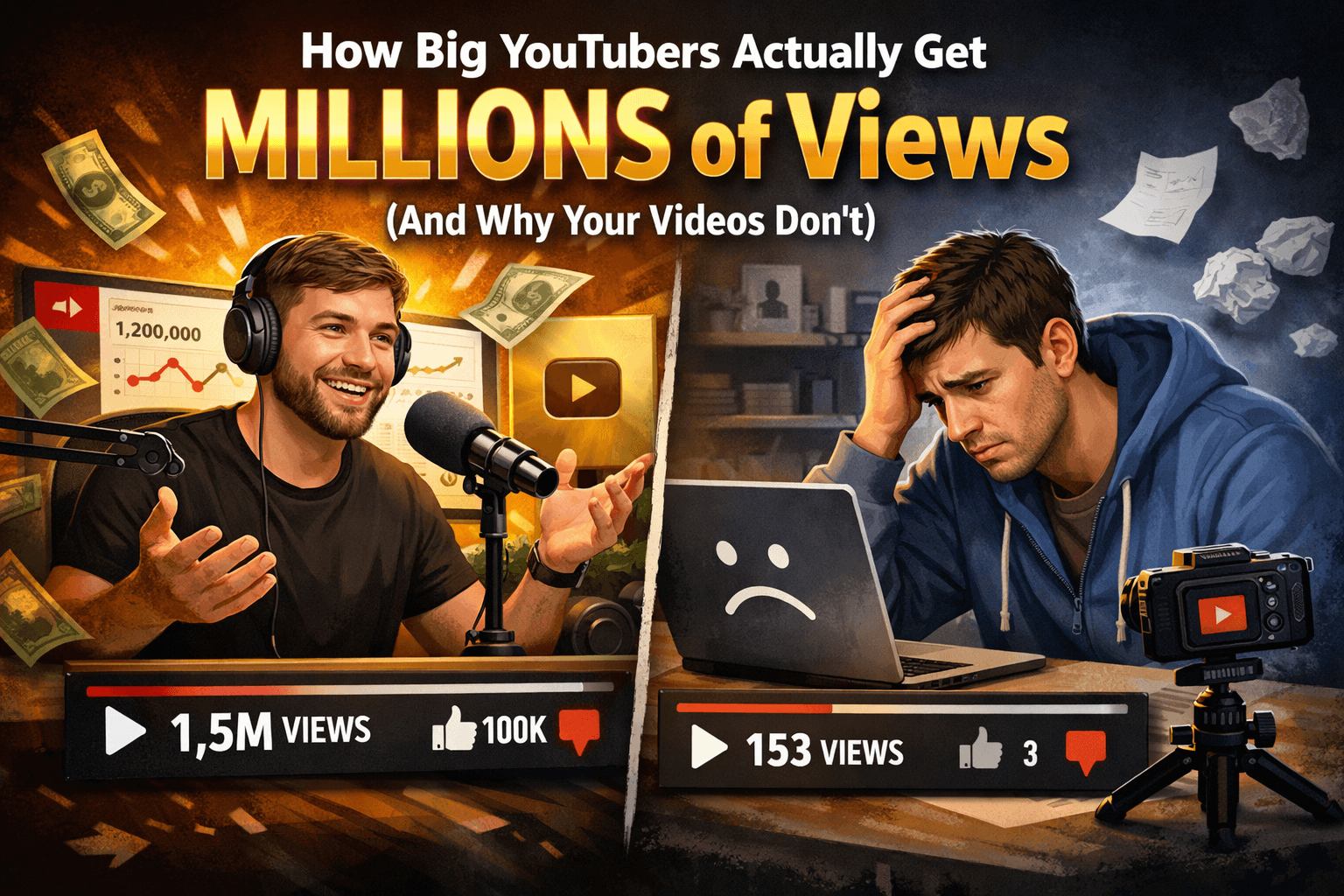
Why your YouTube videos don’t get views is one of the biggest questions new and growing creators ask. You spend hours planning, recording, and editing a video, upload it with hope, and then see only a handful of views.
Meanwhile, another creator publishes a video on a similar topic and reaches hundreds of thousands—or even millions—of viewers.
The difference is not always expensive cameras, professional editing, or luck. Successful creators often understand how the YouTube algorithm, click-through rate (CTR), watch time, audience retention, thumbnails, and viewer satisfaction work together.
In this guide, you’ll learn why some YouTube videos get millions of views and how to identify what may be stopping your own videos from growing.
If you’re wondering why your YouTube videos don’t get views, you’re not alone. Many small creators struggle to understand why one video receives only a handful of views while another video on a similar topic reaches hundreds of thousands or even millions.
The difference is not always expensive cameras, professional editing, or luck.
Successful creators often understand how the YouTube algorithm, click-through rate (CTR), watch time, audience retention, thumbnails, and viewer satisfaction work together.
In this guide, we’ll explain how big YouTubers get millions of views and what you can do to improve your own video’s performance.
Why Your YouTube Videos Don’t Get Views
Getting fewer views does not automatically mean your video is bad. In many cases, the problem is how viewers discover and respond to the video.
A video may struggle because people are not clicking the thumbnail, viewers leave too early, the topic does not match audience interest, or the title creates expectations the video does not satisfy.
How the YouTube Algorithm Works in 2026
The YouTube recommendation system is designed to help viewers discover videos they are likely to watch and find valuable.
Instead of simply rewarding large channels, YouTube analyzes how viewers respond to content and recommendations.
For a deeper understanding of how recommendations work, the official YouTube recommendation system guide explains how YouTube works to connect viewers with videos they may want to watch.
The YouTube Metrics That Actually Matter
YouTube Analytics provides valuable information about how viewers discover and interact with your videos. Instead of guessing why a video is underperforming, creators should study the data.
Impressions
Impressions show how often your video’s thumbnail was displayed to viewers on eligible YouTube surfaces.
Click-Through Rate (CTR)
Click-through rate shows the percentage of counted impressions that resulted in a video view. Your thumbnail and title can strongly influence whether viewers decide to click.
Watch Time
Watch time measures the total amount of time viewers spend watching your video.
Audience Retention
Audience retention helps you understand which parts of your video keep viewers interested and where people stop watching.
Viewer Satisfaction
YouTube also considers whether viewers appear satisfied with the videos they watch and recommendations they receive.
How YouTube Recommends Videos to Viewers
YouTube’s recommendation system tries to connect viewers with videos they are likely to watch and find valuable.
A video’s reach can expand as YouTube gathers more information about how different viewers respond to it.
How to Read YouTube Analytics Correctly
- Low impressions: Review the topic, audience demand, and traffic sources.
- High impressions but low CTR: Review your thumbnail and title.
- Good CTR but weak retention: Improve the opening and content delivery.
- Strong retention: Study what kept viewers interested and repeat successful patterns.
Why YouTube Thumbnails Matter for CTR
Before someone watches your video, they usually see the thumbnail and title. Your thumbnail needs to communicate the video’s idea quickly and clearly.
Why the First 30 Seconds of Your Video Matter
The opening of your video can strongly influence whether viewers continue watching. Try to clearly communicate what the viewer will learn, experience, or discover as early as possible.
How Titles and Descriptions Help YouTube Understand Your Video
Your video title and description provide important context about your content. Use clear, natural wording that accurately describes the video’s topic.
Does Early Engagement Help YouTube Videos?
Likes, comments, and shares can provide useful information about how viewers interact with your content. Focus on generating genuine audience interaction instead of artificial engagement.
YouTube Growth Strategies That No Longer Work Consistently
- Uploading videos without reviewing analytics
- Using misleading clickbait that disappoints viewers
- Stuffing keywords into titles and descriptions
- Focusing heavily on tags while ignoring thumbnails
- Using long introductions before delivering value
What Actually Helps You Get More YouTube Views
- Choosing topics your target audience genuinely cares about
- Creating stronger titles and thumbnails
- Capturing viewer attention quickly
- Studying audience retention data
- Improving videos based on YouTube Analytics
If you’re also trying to grow with short-form content, read our YouTube Shorts growth strategy to learn how upload timing, viewer retention, and consistent publishing can support channel growth.
Why Evergreen YouTube Videos Can Generate Views for Years
Evergreen videos focus on topics that remain useful or relevant for a long period of time. Tutorials, educational videos, explanations, comparisons, and problem-solving content can continue attracting viewers months or even years after publication.
YouTube Video Optimization Checklist
Before Publishing Your Video
- Choose a clear topic with a defined audience.
- Create an accurate title.
- Design a noticeable thumbnail.
- Make the opening engaging.
During the First Few Days
- Review impressions and traffic sources.
- Monitor CTR.
- Check audience retention.
- Respond naturally to comments.
Frequently Asked Questions About Getting More YouTube Views
Why are my YouTube videos not getting views?
Your videos may struggle because of low topic demand, weak thumbnails, unclear titles, low CTR, poor audience retention, or a mismatch between the video’s promise and content.
How do big YouTubers get millions of views?
Successful YouTubers often understand their audience, choose strong topics, create effective thumbnails and titles, and continuously study performance data.
Do YouTube tags help videos rank?
Tags generally play a limited role in YouTube video discovery. Focus more on titles, thumbnails, descriptions, and viewer experience.
Can an old YouTube video suddenly get more views?
Yes. Older videos can receive additional views when audience interest changes, search demand increases, or the content becomes relevant to new viewers.
Final Thoughts: Why Your YouTube Videos Don’t Get Views
Understanding why your YouTube videos don’t get views requires more than searching for a hidden algorithm trick.
Instead of guessing, use YouTube Analytics to identify weaknesses and improve one element at a time.
Consistent observation, testing, and improvement can help you create videos that attract clicks, keep viewers interested, and build long-term channel growth.